Victoria Falls: Mosi-oa-Tunya, The Smoke That Thunders
Where the Zambezi River meets a great cleft in the earth, water, stone, forest and memory come together in one of southern Africa’s most remarkable landscapes.
Long before Victoria Falls became a name recognised around the world, the great curtain of water had its own name: Mosi-oa-Tunya — “The Smoke That Thunders”. It describes what happens when the Zambezi plunges into a deep series of gorges and sends spray rising high above the surrounding forest.
A river, a plateau and a sudden drop
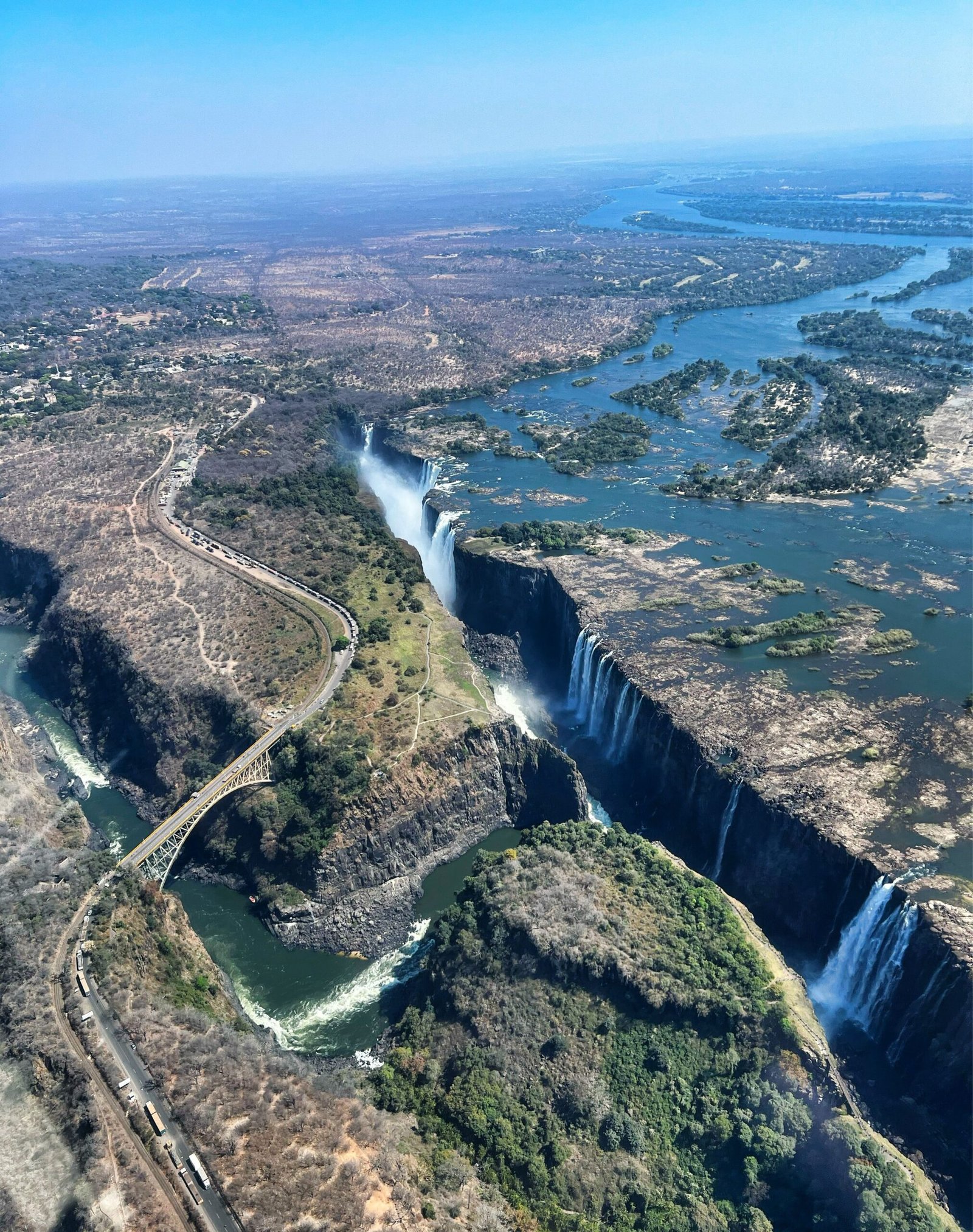
Victoria Falls lies on the Zambezi River, along the border between Zimbabwe and Zambia. The river flows across a broad plateau before reaching a resistant band of basalt. Over time, fractures in this volcanic rock have been widened by the force of water, creating the dramatic edge where the river drops into a narrow chasm.
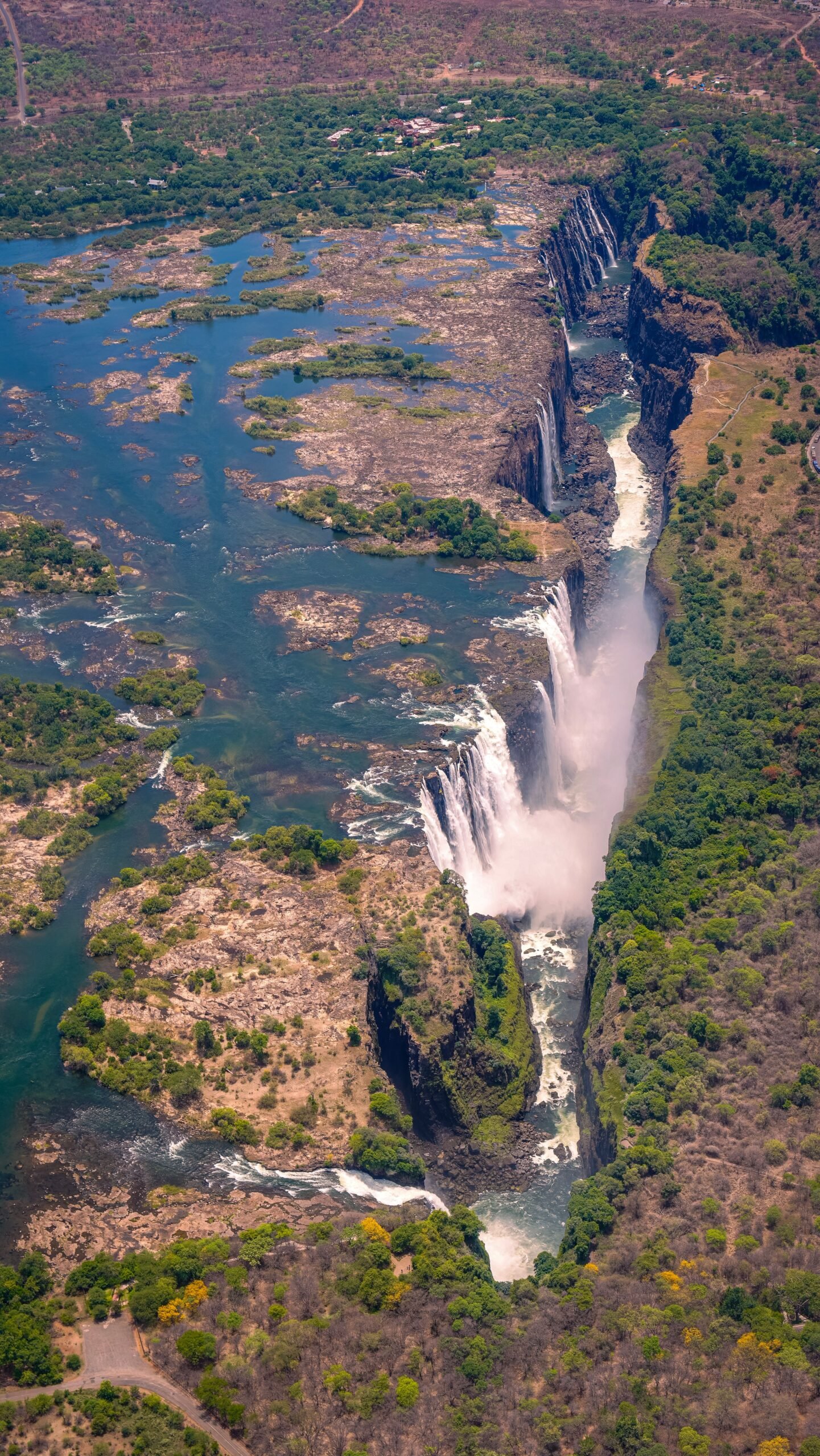
The falls are not simply one unchanging wall of water. The main curtain is broken by islands and rock projections, while the river has carved a sequence of deep, zigzagging gorges downstream. The position and shape of the active waterfall shift with erosion and the river’s flow.
The smoke that changes with the seasons
The volume of water changes through the year. During the high-water season, usually following the rainy months in the Zambezi catchment, the spray can rise dramatically and may obscure parts of the falls from view. In lower-water months, more of the rock face and individual channels can become visible. Conditions vary from year to year, so the experience is never exactly the same.
The spray also creates a special environment beside the gorge. Moisture supports a rainforest that contrasts with the drier woodland beyond it. Plants thrive in this wet pocket, and visitors may notice the difference in temperature, vegetation and atmosphere as they move through the area.
A heritage shared across a border
The falls are a landmark for both Zimbabwe and Zambia. The protected landscape is recognised internationally as a single transboundary World Heritage property, listed by UNESCO in 1989. Its significance lies not only in the spectacle of the waterfall, but also in the geological processes and ecological communities associated with the river and gorge.
The name Mosi-oa-Tunya keeps an important local perspective in view. The internationally familiar name “Victoria Falls” entered colonial-era records after David Livingstone’s visit in 1855 and his naming of the falls in honour of Queen Victoria. The two names reflect different histories of how this place has been known and described. Using the local name alongside the colonial-era name helps acknowledge that the falls had meaning long before they became a destination on European maps.
More than a view
For Zimbabwe, Victoria Falls is a place of natural beauty, tourism, livelihoods and national recognition. The town that shares its name has grown around the visitor economy, while the river and surrounding protected areas remain important to wildlife, conservation and regional water systems.
Its future depends on careful stewardship. Tourism brings opportunities, but the falls and their surrounding ecosystems are affected by water availability, climate variability, infrastructure and the pressures that come with increasing visitor numbers. Protecting the site means looking beyond the viewpoint to the river basin and the communities connected to it.
River: Zambezi
Location: On the Zimbabwe–Zambia border
Local name: Mosi-oa-Tunya — “The Smoke That Thunders”
UNESCO inscription: 1989, as a shared World Heritage property
Landscape: Waterfall, basalt gorges, riverine habitats and spray-fed rainforest
A place that keeps speaking
Victoria Falls is often photographed as a single breathtaking moment. Yet its story is longer and more layered: a river still moving, rock slowly reshaped, a rainforest sustained by spray, and names that carry different memories. Mosi-oa-Tunya reminds us that Zimbabwe’s heritage is not only found in monuments and archives. It is also alive in the natural places that continue to shape how people understand home.
UNESCO World Heritage Centre, Mosi-oa-Tunya / Victoria Falls.
UNESCO World Heritage Centre, Property documents and conservation information.
NASA Earth Observatory, Victoria Falls.