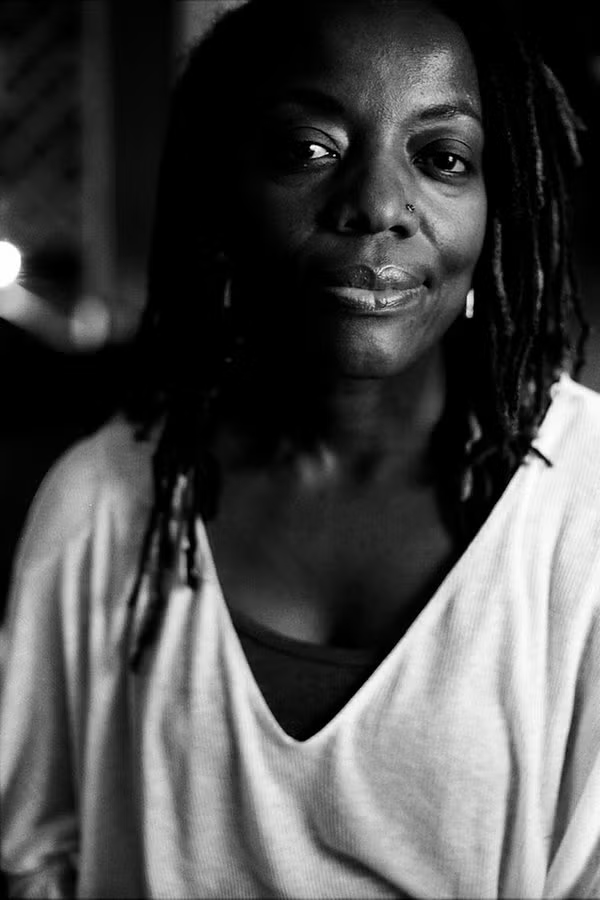
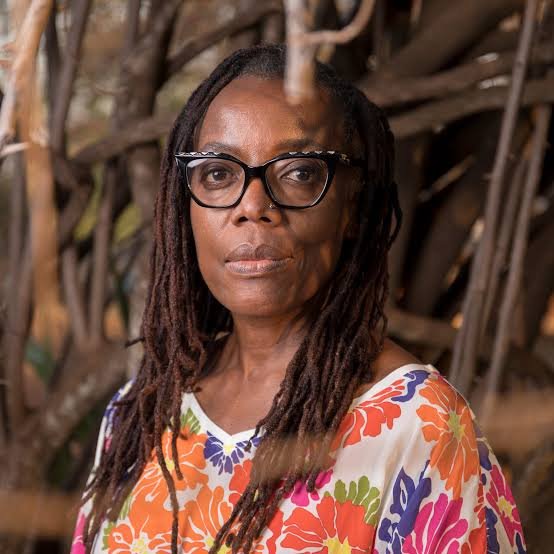
Some writers tell stories. Others change the way a country sees itself. Tsitsi Dangarembga belongs to the latter. Through fiction, theatre and film, the Zimbabwean writer has explored the intimate realities of family, education, gender, colonial history and the difficult promises of independence. Her work has travelled far beyond Zimbabwe, while remaining deeply engaged with the lives and questions of its people.
A story that opened a door
Born on 4 February 1959, Tsitsi Dangarembga is a novelist, playwright and filmmaker from Zimbabwe. Her debut novel, Nervous Conditions, published in 1988, introduced readers to Tambudzai, a young Shona girl whose pursuit of education unfolds within the unequal structures of colonial Rhodesia. The novel examines the pressures placed on women and girls, and the complicated relationship between opportunity, family, class and identity.
Nervous Conditions won the Commonwealth Writers’ Prize for the Africa region in 1989. It is widely recognised as a landmark in African literature and as the first novel in English published by a Black Zimbabwean woman. Its importance is not only in who wrote it, but in whose interior world it placed at the centre of the story.
Following Tambu through changing times
Dangarembga returned to Tambudzai’s life in The Book of Not (2006), before completing the trilogy with This Mournable Body (2018). Across the three novels, Tambu moves from girlhood in colonial Rhodesia into adulthood in post-independence Zimbabwe. Her journey brings personal ambition into conversation with the wider history of a nation still negotiating the meaning of freedom, opportunity and belonging.
This Mournable Body was shortlisted for the 2020 Booker Prize. The recognition introduced the trilogy to an even wider international readership, but the questions at its heart remain rooted in Zimbabwean experience.
Beyond the page: film, theatre and cultural work
Dangarembga’s creative work extends beyond novels. She is also a playwright and filmmaker, with film credits including Everyone’s Child (1996). In 2009, she founded the Institute of Creative Arts for Progress in Africa (ICAPA) Trust in Harare, supporting creative development and cultural work. Her contribution to Zimbabwean storytelling is therefore not limited to the stories she has written; it also includes the spaces and opportunities she has helped build for other artists.
A voice recognised around the world
Her achievements have been recognised through major literary and cultural honours. These include the PEN Pinter Prize and the Peace Prize of the German Book Trade in 2021, followed by the Windham-Campbell Prize for Fiction in 2022. Such awards acknowledge an artistic career whose concerns — the dignity and agency of women, the legacies of colonialism and the responsibilities of power — speak across borders.
Why her work belongs to Zimbabwe’s heritage
Heritage is more than monuments, dates and official records. It is also the language people use to understand their lives, the memories they carry and the questions they pass to the next generation. Dangarembga’s writing gives readers a way to examine Zimbabwe’s past and present through the experiences of people whose stories are often pushed to the margins.
Her books do not offer easy answers or a simplified picture of the country. They invite readers to look more closely — at the opportunities education can create, the barriers that remain, and the complicated work of becoming free in both public and private life.
For Zimbabweans at home and across the diaspora, Tsitsi Dangarembga’s contribution is a reminder that our heritage is also carried in our ideas, our creative work and the stories we choose to tell. Her voice has become part of the wider conversation about Zimbabwe, Africa and the world.
Dambudzo Marechera: The Writer Who Refused to Be Tamed
Restless, fiercely original and unwilling to accept easy answers, Marechera transformed the experience of colonial Rhodesia, exile and independent Zimbabwe into some of the most challenging writing in African literature.
ZimHeritage Editorial · 9 min read
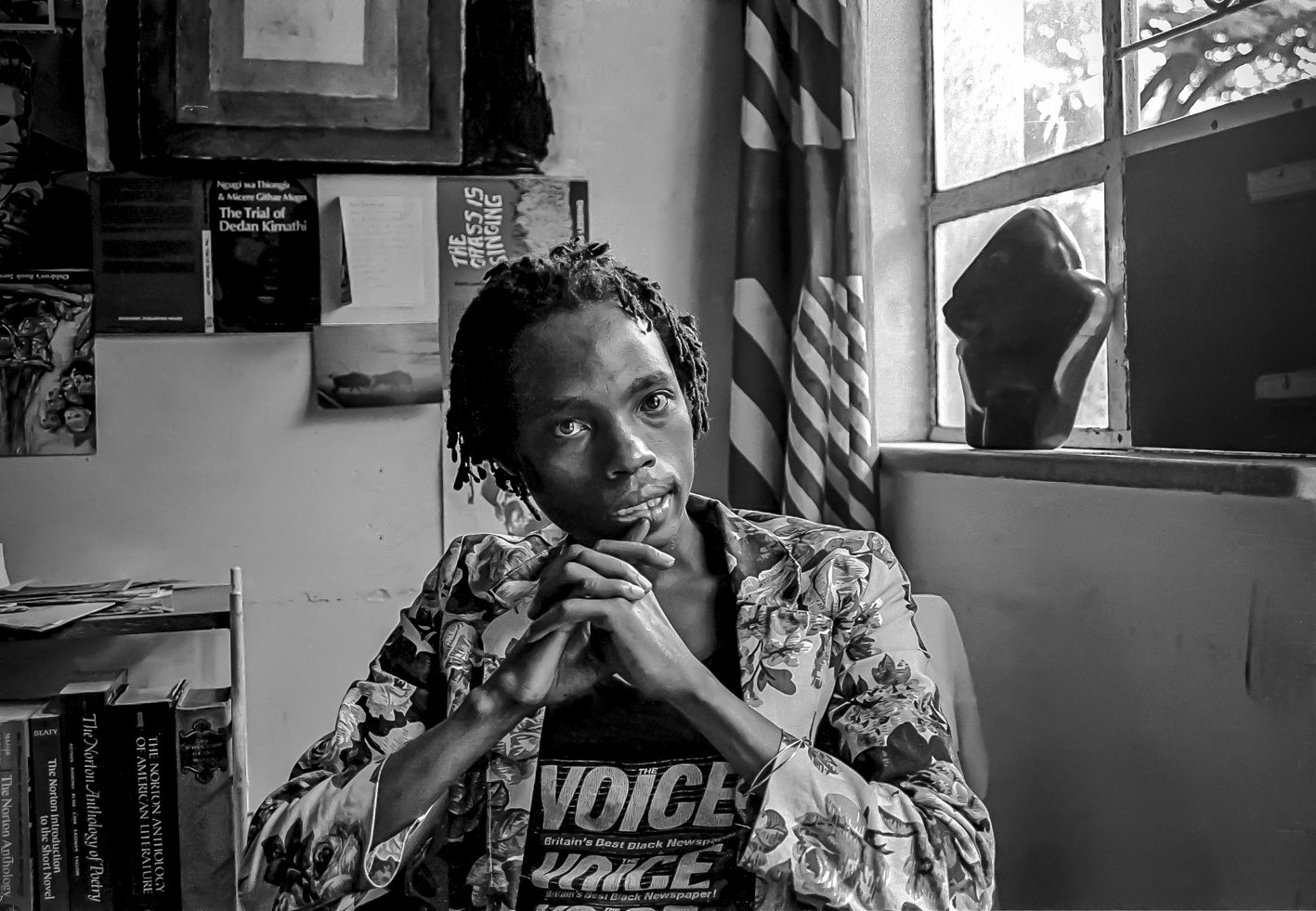
Dambudzo Marechera (1952–1987), whose writing challenged literary conventions and the political orthodoxies of his time. Image supplied to the ZimHeritage archive.
Dambudzo Marechera was never an easy writer to place in a category. He was a novelist, poet, playwright and essayist whose work moved between memory, anger, humour, fear and philosophical argument. He could be celebrated as a major literary talent and criticised as a difficult, disruptive figure. Both reactions point towards the force of his work: Marechera refused to make himself comfortable for other people.
Born Charles William Dambudzo Marechera on 4 June 1952 in Vengere township, Rusape, in what was then Southern Rhodesia, he grew up in a family whose circumstances changed sharply after his father’s death in a road accident in 1966. Poverty, racial segregation and the violence of colonial society were not distant political subjects. They formed part of the world in which he came of age. His writing would return repeatedly to the psychological damage and contradictions of that world.
Rusape, books and the making of a writer
Marechera’s early life was marked by material hardship, but he developed an intense relationship with reading. He attended St Augustine’s Secondary School and later studied at the University of Rhodesia. His academic ability opened doors, while his restless temperament and political involvement brought him into conflict with institutions around him.
The name Dambudzo, commonly translated from Shona as sorrow or trouble, became the name under which he wrote. It seemed to suit a writer who would not separate private experience from the wider conditions of society, but who also resisted being made into a simple representative of a nation, race or political movement.
Oxford and the experience of exile
In 1974 Marechera went to New College, Oxford, on a scholarship. The move took him from white-minority-ruled Rhodesia into a British university with its own traditions, hierarchies and expectations. He did not settle into academic life. After conflict with the college, he was sent down in 1976.
His departure from Oxford did not mean the end of his intellectual life. It marked the beginning of a difficult period in Britain, during which he experienced insecure housing and periods of homelessness. He continued reading and writing, drawing on an unusually wide range of European, African and other literary traditions. Oxford’s Old Fire Station later revisited this period in its exhibition Disruptive Dialogues: The Legacies of Dambudzo Marechera, tracing his journey through Oxford and Harare and the continuing responses his work provokes.
It was in these unsettled circumstances that much of the writing associated with his first major book took shape. Exile was not simply a change of address. It sharpened his attention to alienation, language, belonging and the limits of the identities other people tried to impose on him.
The House of Hunger: a landmark debut
Published in 1978, The House of Hunger brought Marechera international attention. The book is often described as a novella accompanied by a sequence of related stories. Its fragmented, intense form reflects a world in which violence and deprivation are not neatly contained or resolved. It confronts the psychic injuries of colonial Rhodesia through a voice that is at once intimate, angry, ironic and unstable.
The book won the Guardian Fiction Prize in 1979. The award established Marechera as an important new literary presence, but the ceremony itself became part of his public mythology after his unconventional appearance and disruptive behaviour. The episode is often retold as evidence of his refusal to perform the role expected of a prize-winning African writer. It should not, however, distract from the achievement of the book itself: a formally daring account of life under a violent racial order.
Marechera did not write to make the world look orderly. He wrote from inside its fractures.
A writer beyond the expected categories
Marechera’s second book, Black Sunlight (1980), pushed further into experimental territory. Its concerns with violence, power, rebellion and the instability of political movements made it difficult to reconcile with the expectation that African literature should provide reassuring narratives of national liberation or cultural affirmation.
His later work included Mindblast (1984), a collection of prose, essays and other writing that displayed his intellectual range and his suspicion of political slogans. His writing did not offer a straightforward celebration of independence. He questioned what happens when a liberation movement becomes a government, when new leaders inherit old structures of power, and when the language of freedom is used to silence criticism.
That independence of mind also made him difficult to categorise within African literary debates. Marechera was deeply engaged with African experience, but he rejected the idea that an African writer should be restricted to a prescribed set of themes, styles or cultural obligations. His essays make clear that he read widely and regarded literature as an open, international conversation.
Independence, Mugabe and the refusal to fall in line
Marechera returned to Zimbabwe in 1982, two years after independence. The new country carried immense hopes after the end of white-minority rule. Yet he was sceptical of the new political establishment and unwilling to exchange criticism of colonial power for unquestioning loyalty to nationalist leaders.
His relationship with Robert Mugabe was complicated. Accounts of Marechera’s life describe him heckling Mugabe at a London meeting in 1978, before independence, and later criticising the direction of the new government. His book Mindblast is among the works associated with his sharp scrutiny of the post-independence political climate. He was not simply an opponent of independence; he was a writer who insisted that liberation should be judged by the freedoms and dignity it delivered to ordinary people.
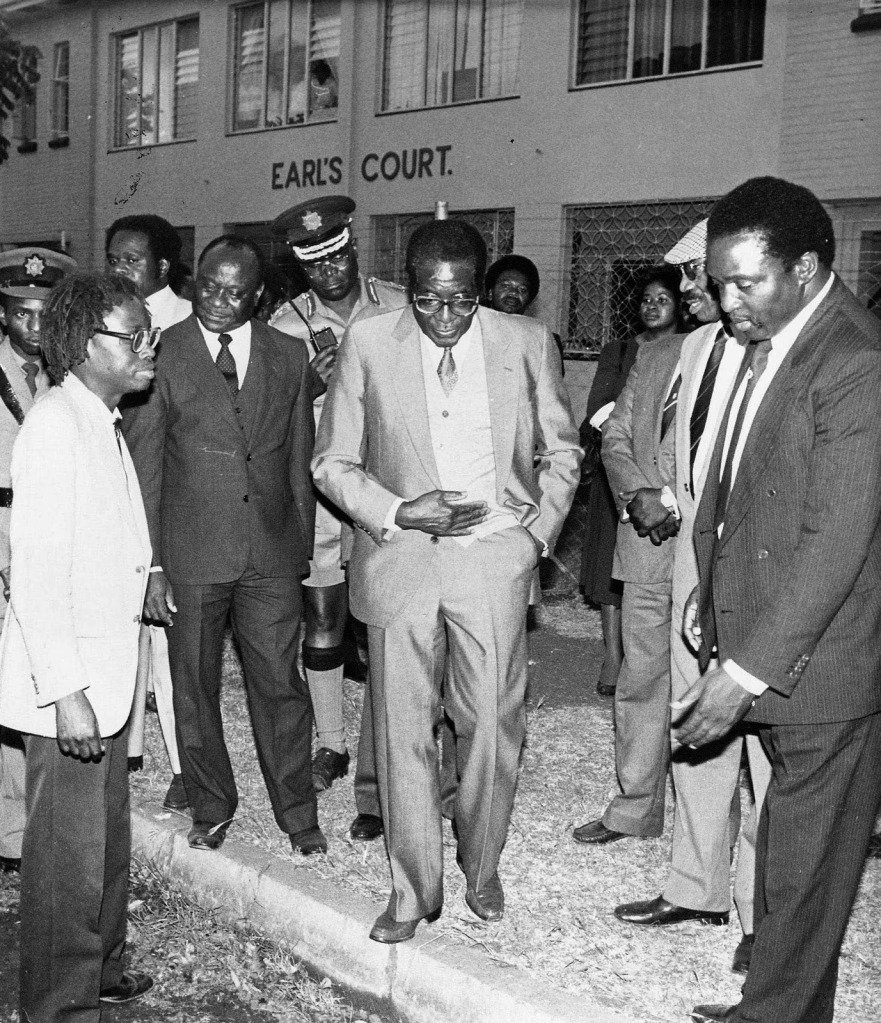
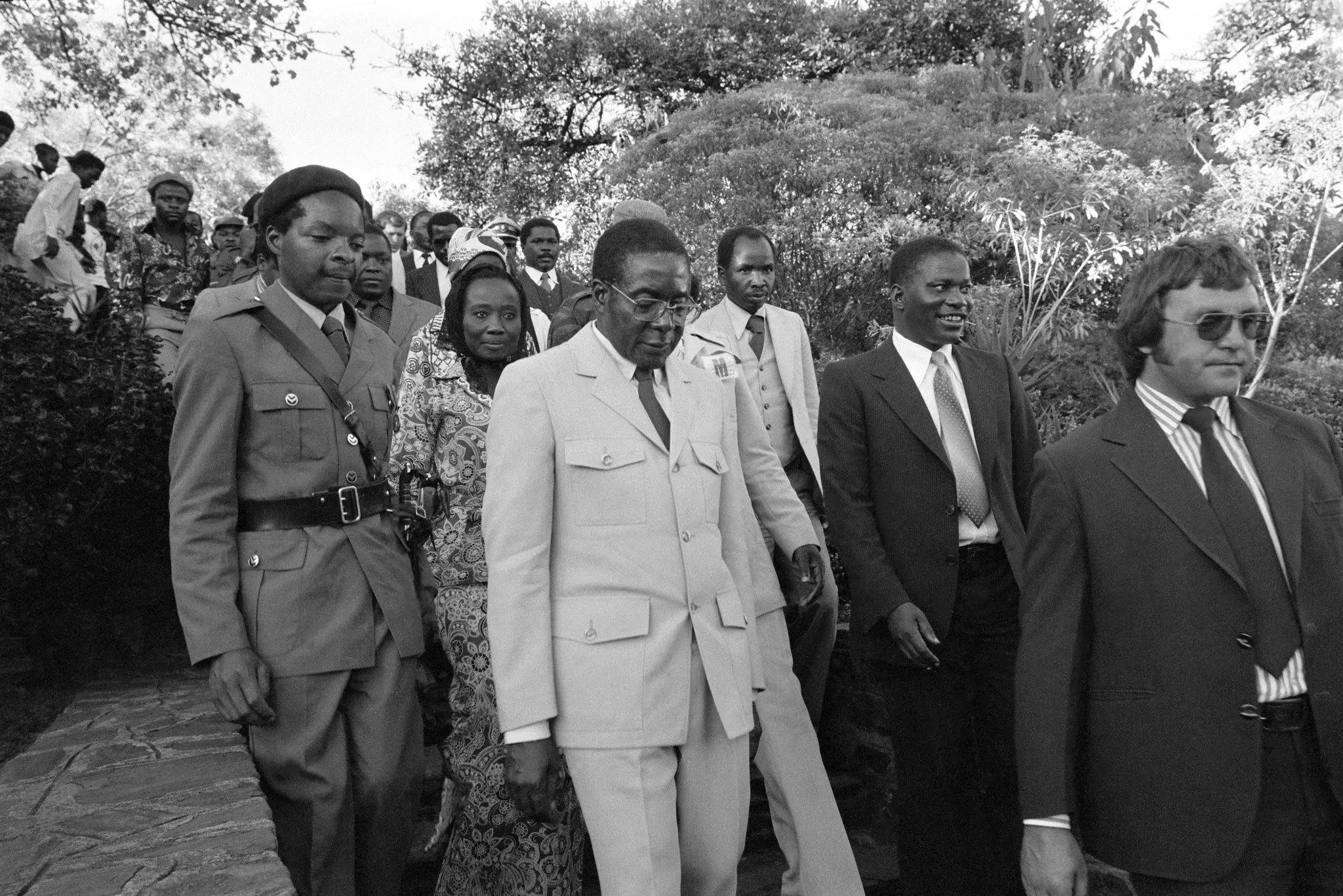
Archival photograph. The supplied media-library caption identifies the people pictured as Dambudzo Marechera, Enos Nkala, Robert Mugabe, Maurice Nyagumbo and Emmerson Mnangagwa. The precise date and circumstances of the photograph have not been independently established for this article. Credit recorded in the media library: Parade Magazine / Marechera Archive.
There is a striking historical tension in the photograph above: the writer who resisted political ceremony is pictured in the company of senior figures from the new state. A photograph alone cannot tell us what was said, what each person thought, or whether the gathering represented agreement. It is best treated as a visual record whose context still deserves careful documentation, not as proof that Marechera reconciled himself to the political leadership.
Loss, final years and an early death
In 1987, Marechera’s sister Tsitsi was killed in a bombing in Harare. The attack formed part of the violence surrounding the regional struggle against apartheid South Africa; accounts of the incident and its responsibility have been discussed in later historical reporting and truth-and-reconciliation testimony. The loss was devastating for the family and came during a difficult period in Marechera’s own life.
Marechera died in Harare on 18 August 1987, aged 35. His death cut short a career that was still developing. Biographical sources record that he was seriously ill; descriptions of the precise medical circumstances vary, so this article does not reduce his death to an unqualified diagnosis. What is clear is that he died young, leaving a body of work that continued to grow through posthumous publication and critical attention.
The work that remained
After his death, further writing was collected and published, including The Black Insider, Cemetery of Mind and Scrapiron Blues. These books helped readers encounter a wider range of his prose and poetry. His archive and the continuing scholarship around it have also made it possible to revisit the man beyond the familiar image of the rebellious, unpredictable outsider.
That distinction matters. Marechera’s public reputation can sometimes overshadow the discipline, reading and artistic ambition behind the writing. The legend of the difficult genius is memorable, but it is not a substitute for reading the work. His books reward attention because they challenge readers to sit with uncertainty rather than accept easy conclusions.
Why Dambudzo Marechera still matters
Marechera remains important because he insisted that the writer’s responsibility is not to flatter power, whether colonial or postcolonial. He challenged racism, but he also challenged the expectation that anti-colonial politics should place national leaders beyond criticism. He wrote about the damage done to people by systems of power, and about the difficulty of making a free inner life in a world that tries to define you.
His work is not always comfortable, and it does not offer a simple national story. That is precisely why it remains alive. For Zimbabwean readers, Marechera is part of a literary heritage that makes room for dissent, experiment and difficult questions. He reminds us that a country’s culture is not only made by those who speak for the nation. It is also made by those who challenge it to become more honest.
To remember Dambudzo Marechera is to remember more than a restless personality or a celebrated first book. It is to return to the writing: uncompromising, restless and still capable of unsettling the present.
Rosemary Chikafa-Chipiro, “Meeting Dambudzo at Oxford,” Matatu 55 (2024) — a scholarly reflection on Marechera’s Oxford archive and memory.
Editorial note: Dates and publication details are cross-checked against the sources listed. The caption and date of the supplied group photograph have not been independently verified beyond the information recorded in the ZimHeritage media library.
O’Meara Chiedza Rusike: Breaking Barriers, One Race at a Time
From discovering horses through a newspaper advert in Zimbabwe to winning the inaugural OKAPI Ladies International, Rusike’s journey has carried her into a sport where Black women have rarely been seen.
She entered a world with few women who looked like her — and made her own place on the track.
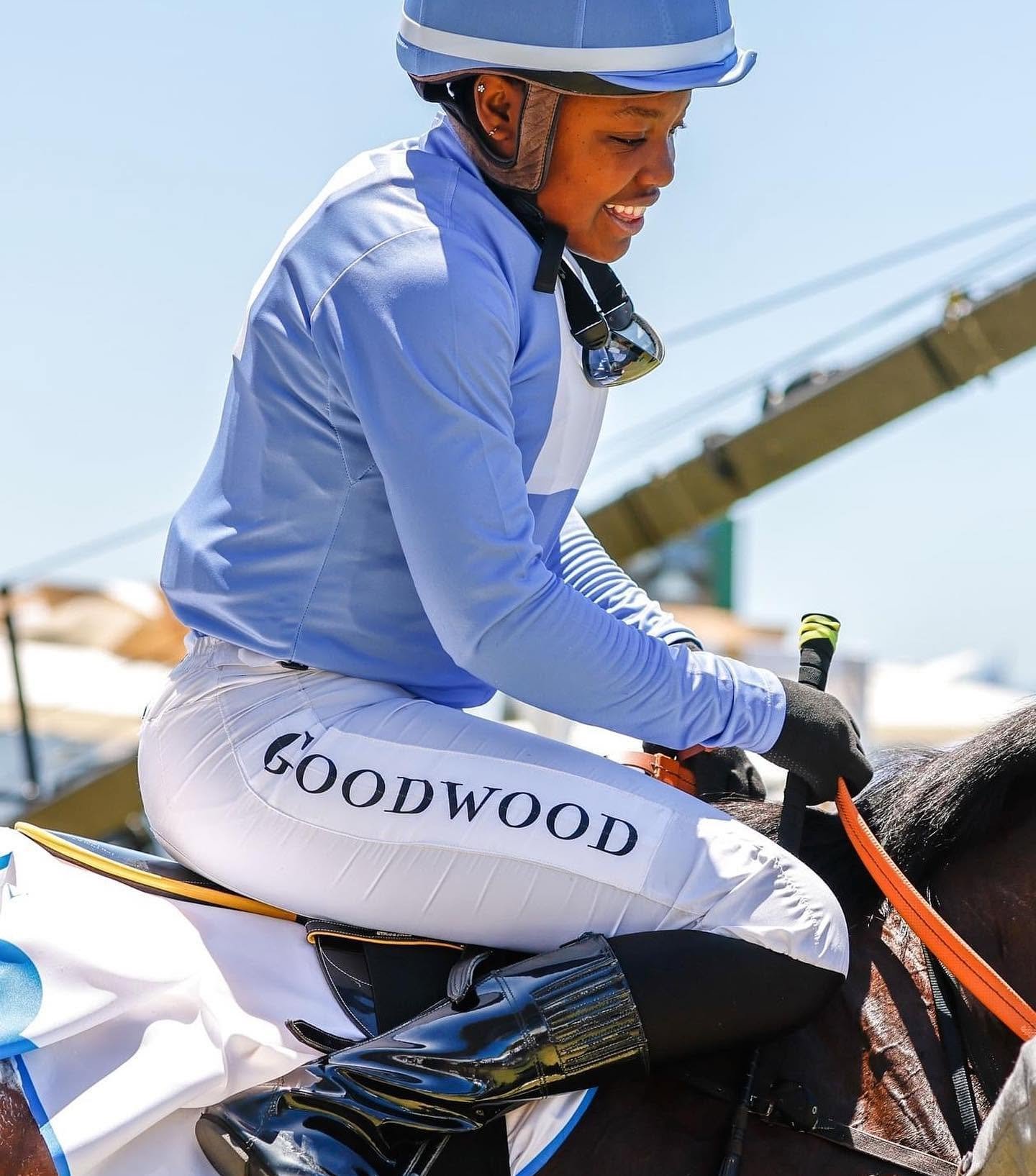
When O’Meara Chiedza Rusike first encountered the possibility of becoming a jockey, horses were not part of her everyday life. The opportunity came through an advert for the Zimbabwe Jockey Academy. What followed was a demanding journey through training yards, race meetings, setbacks and new beginnings — one that would make her a trailblazer in Zimbabwean horse racing.
Rusike became widely recognised as Zimbabwe’s first Black female jockey. Her achievements are significant not because the road was easy, but because she kept finding ways forward in a sport where access, opportunity and representation have not been equal.
O’Meara Chiedza Rusike — a Zimbabwean rider whose career opened doors and challenged expectations.
A chance encounter with a new world
In 2015, an advert for the Zimbabwe Jockey Academy caught the attention of Rusike’s family. She had not grown up around horses and, by her own account in an interview published by the South African Jockey Academy, had never been close to one. She applied, was accepted and began her training in 2016.
The academy offered a route into a highly specialised profession. Becoming a jockey requires more than courage in the saddle: apprentices must develop balance, judgement, fitness, discipline and a close understanding of horses. Rusike’s early years included the physical demands of training and the challenge of proving herself in an environment where women were few.
Making history at Borrowdale
Rusike’s first race came at Borrowdale Park in Harare on 16 December 2018, riding a horse named Supa. She finished sixth in a field of 13. The following year brought a landmark result. In October 2019, she rode Lunar Dancer to victory in an 1,100-metre MR70 handicap at Borrowdale — reported by The Herald as the first time a Black female jockey in Zimbabwe had won a major race.
That result mattered beyond the finishing order. It showed young Zimbabwean women that the racecourse was not a place from which they should automatically imagine themselves excluded. Rusike was competing in a demanding profession and doing so at the highest level available to her at home.
Representation matters most when it becomes something the next person can see as possible.
Taking the journey beyond Zimbabwe
When the Zimbabwe Jockey Academy closed because of financial difficulties, Rusike’s route changed. She moved into further training in South Africa, joining the South African Jockey Academy in 2020. The period was difficult: the Covid-19 pandemic disrupted plans, financial support was limited and the path to a sustainable career was uncertain.
She continued to look for opportunities. Her experience included work at stud farms and time in the racing industry in South Africa. She later moved to the United Kingdom, where she worked as a work rider for trainer Ralph Beckett. A work rider exercises and helps prepare horses in training; it is a different role from competing as a race-day jockey, but it keeps a rider closely involved in the daily work of the sport.
Rusike also took part in the Magnolia Cup at Goodwood in Britain. Contemporary reporting described her as the first woman of African descent to participate in that race — another milestone in a career that crossed national borders.
A memorable win in Cape Town
On 7 January 2023, Rusike returned to the spotlight at the inaugural OKAPI Ladies International, held over 1,200 metres at Kenilworth Racecourse during the L’Ormarins King’s Plate meeting in Cape Town. She rode Pacific Green to victory. The horse was bred and owned by Drakenstein Stud and trained by Justin Snaith.
The race brought together women riders from different backgrounds for a high-profile event. Rusike’s win was a major moment: a Zimbabwean rider, who had started out after seeing an advert at home, taking the honours in an international field. It added another chapter to her story and brought wider attention to the possibilities for women in racing.
More than a finish line
Rusike’s story is about sporting achievement, but it is also about access. Horse racing depends on training facilities, experienced mentors, financial support and opportunities to compete. For aspiring riders who do not come from established racing families, each of those steps can be difficult to reach. For Black women in particular, a lack of visible role models can make an already narrow pathway feel even narrower.
Her journey does not mean those barriers have disappeared. Nor should one person be expected to carry the responsibility of changing an entire industry. But her milestones give the next generation something tangible: proof that a Zimbabwean girl can enter the sport, learn its demands, compete and win.
There is a lesson here for the wider story of Zimbabwean achievement. Some pioneers make history in parliament, classrooms, laboratories or on stages. Others do it on a racecourse, through early mornings, long hours in the yard and the nerve to keep going when the odds are not evenly set.
A path others can follow
O’Meara Chiedza Rusike’s career reminds us that talent can emerge from unexpected places. A newspaper advert opened a door; persistence kept her moving through it. Her name belongs among the Zimbabweans whose achievements have expanded the picture of who gets to represent the country — and what a new generation might dare to pursue.
ZimHeritage · The places. The people. The stories.Zimbabwe’s story is also told by those who dare to break new ground.
Oliver Mtukudzi: The Voice That Became Zimbabwe’s Soundtrack
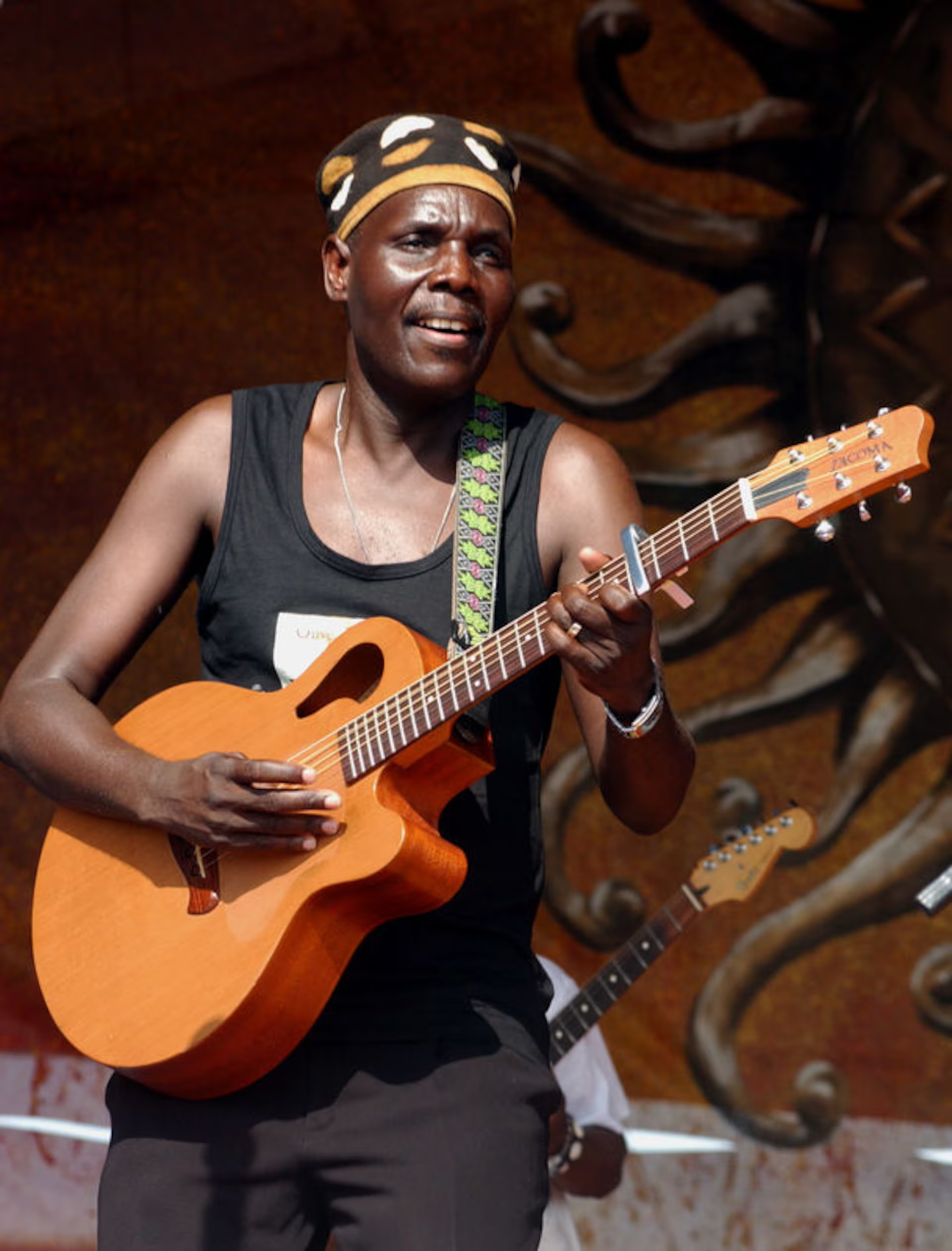
Oliver “Tuku” Mtukudzi — a voice that became part of Zimbabwe’s cultural story.
He sang about ordinary lives with uncommon honesty. Across decades of change, Tuku built a sound that travelled far beyond Zimbabwe — while keeping its roots close to home.
Some voices become part of the places they come from. In Zimbabwe, the unmistakable voice of Oliver “Tuku” Mtukudzi became one of them. Warm, textured and instantly recognisable, it carried songs about love, family, hardship, responsibility and the everyday choices that shape a life.
Mtukudzi was born in Highfield, then in Southern Rhodesia, on 22 September 1952. He grew up in a musical household: his parents sang, and music was part of family life. He began pursuing a professional career in the 1970s, releasing his debut single, “Stop After Orange”, in 1975. In 1977 he joined the Wagon Wheels, a group that included Thomas Mapfumo. He later left to establish his own band, The Black Spirits, and develop a musical identity that would become known as Tuku Music.
Finding a sound of his own
Tuku Music was never simply one rhythm or instrument. Mtukudzi drew on Zimbabwean musical traditions and blended them with influences from across the region and beyond. His guitar patterns, measured rhythms and distinctive vocal phrasing created a sound that listeners could recognise within moments.
His songs were often built around ideas that felt close to daily life. Rather than relying on grand statements, he could make a point through a family story, a relationship or a familiar social situation. His lyrics, sung in Shona, Ndebele and English, reached different audiences while remaining rooted in the experiences and language of Zimbabwe.
He made songs that could entertain a room and leave it with something to think about.
Songs that spoke beyond the stage
Mtukudzi’s work often turned towards social questions. “Neria”, associated with the film of the same name, brought attention to the vulnerability of a woman facing dispossession after her husband’s death. Other songs explored relationships, respect, ageing, social responsibility and the pressures people face in their communities.
His music did not fit neatly into a single political label. He could be reflective, critical and compassionate, sometimes all within the same body of work. That ability to address difficult subjects without losing the human scale of a story helped his songs remain meaningful to listeners across generations.
He also worked beyond music. Mtukudzi acted in Zimbabwean films, including Jit and Neria, and used his public profile to support social causes. In 2012, he was appointed a UNICEF Regional Goodwill Ambassador for Eastern and Southern Africa, reflecting his advocacy around children and social issues.
Taking Zimbabwe to the world
His music reached audiences well beyond the country. The 1990s album Tuku Music helped introduce his distinctive sound to a wider international audience, and he toured extensively. Yet international recognition did not erase the local character of the music. The songs continued to draw on Zimbabwean languages, rhythms and everyday concerns.
That balance — a sound that was unmistakably his, but open to conversation with other musical traditions — is part of what made his work endure. He was not presenting Zimbabwe as a single story. He was making room for humour, grief, tenderness, frustration and hope to exist together.
A legacy carried forward
Oliver Mtukudzi died in Harare on 23 January 2019, aged 66. His death was mourned across Zimbabwe and by audiences around the world. The loss was not only that of a celebrated performer; it was the loss of a musician whose work had accompanied people through different stages of their lives and the country’s history.
His catalogue remains a way into Zimbabwean life: the language people speak at home, the questions they wrestle with, the relationships they value and the changes they have lived through. Younger musicians continue to encounter his influence, while listeners return to familiar songs and discover new meanings in them.
A lasting cultural legacy is not measured only by awards, album numbers or the size of a crowd. It is also measured by what people carry with them. For many, a Tuku song can bring back a journey, a family gathering, a difficult season or a moment when the words seemed to describe exactly what was happening. That is how a voice becomes part of a nation’s soundtrack.
ZimHeritage · The places. The people. The stories.A voice that travelled the world — and always sounded like home.
Manage Consent
To provide the best experiences, we use technologies like cookies to store and/or access device information. Consenting to these technologies will allow us to process data such as browsing behavior or unique IDs on this site. Not consenting or withdrawing consent, may adversely affect certain features and functions.
Functional
Always active
The technical storage or access is strictly necessary for the legitimate purpose of enabling the use of a specific service explicitly requested by the subscriber or user, or for the sole purpose of carrying out the transmission of a communication over an electronic communications network.
Preferences
The technical storage or access is necessary for the legitimate purpose of storing preferences that are not requested by the subscriber or user.
Statistics
The technical storage or access that is used exclusively for statistical purposes.The technical storage or access that is used exclusively for anonymous statistical purposes. Without a subpoena, voluntary compliance on the part of your Internet Service Provider, or additional records from a third party, information stored or retrieved for this purpose alone cannot usually be used to identify you.
Marketing
The technical storage or access is required to create user profiles to send advertising, or to track the user on a website or across several websites for similar marketing purposes.