Category: Culture

Zimbabwean music, food, language, traditions, arts and cultural life.

  • The Languages of Zimbabwe: More Than Words, A Living Heritage

    The Languages of Zimbabwe: More Than Words, A Living Heritage

    A language is more than a way to communicate. It carries humour, place names, praise poetry, family histories, songs, proverbs and ways of understanding the world. In Zimbabwe, language is one of the clearest reminders that national identity is made up of many voices.

    Zimbabwe, representing the many languages and voices of the country.
    Zimbabwe’s linguistic heritage is made up of many voices.

    Sixteen officially recognised languages

    Section 6 of Zimbabwe’s Constitution recognises sixteen official languages: Chewa, Chibarwe, English, Kalanga, Koisan, Nambya, Ndau, Ndebele, Shangani, Shona, sign language, Sotho, Tonga, Tswana, Venda and Xhosa. The Constitution also says that the state and public institutions must treat these languages equitably and promote their use and development.

    This constitutional recognition matters. It acknowledges that Zimbabwe’s linguistic heritage extends beyond the languages most visible in national media or commonly used in larger towns. It also includes Zimbabwean Sign Language, recognising the importance of access and communication for Deaf people.

    Language lives in everyday moments

    Language is carried in the greeting offered to an elder, the nickname used by relatives, a proverb remembered from childhood, a joke that only makes sense in a particular language or a song learned by listening. It can hold local knowledge about landscapes, plants, weather, work and relationships.

    Many Zimbabweans move between languages depending on who they are speaking to and where they are. Multilingualism is part of everyday life for many families. People may speak one language at home, another at school or work, and use different languages with friends, neighbours and relatives.

    What happens when a language is not passed on?

    Languages remain strong when people have opportunities to use them: in homes, schools, books, radio, music, public services and digital spaces. When children have fewer chances to hear and speak a family language, some expressions and knowledge can become harder to pass on. This is not simply an individual family’s responsibility; visibility, teaching resources and public support also matter.

    For families living outside Zimbabwe, maintaining a language can take deliberate effort. Parents and grandparents may teach greetings, songs and everyday phrases; relatives may read stories together over video calls; community groups may organise language classes or cultural events. There is no single method, but regular, meaningful use can help keep a language present in daily life.

    A heritage worth hearing

    Respecting Zimbabwe’s languages means making room for all of them — not treating some as more authentic or more important than others. It means recording oral histories, supporting writers and musicians, creating learning materials and listening to speakers describe their own experiences.

    Every language carries a particular archive of human experience. When we protect that diversity, we protect more than words. We protect memory, knowledge and the right of communities to express who they are.

    Which language, phrase or saying connects you to home? Share it with us, along with its meaning and the story behind it.

    Further reading

    Read Section 6 of the Constitution of Zimbabwe, which sets out the officially recognised languages and the state’s responsibilities.
  • Ceremonies, Family and Community: The Meaning Behind Zimbabwean Traditions

    Ceremonies, Family and Community: The Meaning Behind Zimbabwean Traditions

    Some of life’s most important moments are marked not only by what happens, but by who gathers. Families and communities come together to welcome a child, celebrate a marriage, remember someone who has died or recognise a new stage of life. In Zimbabwe, ceremonies can carry histories, responsibilities and relationships across generations.

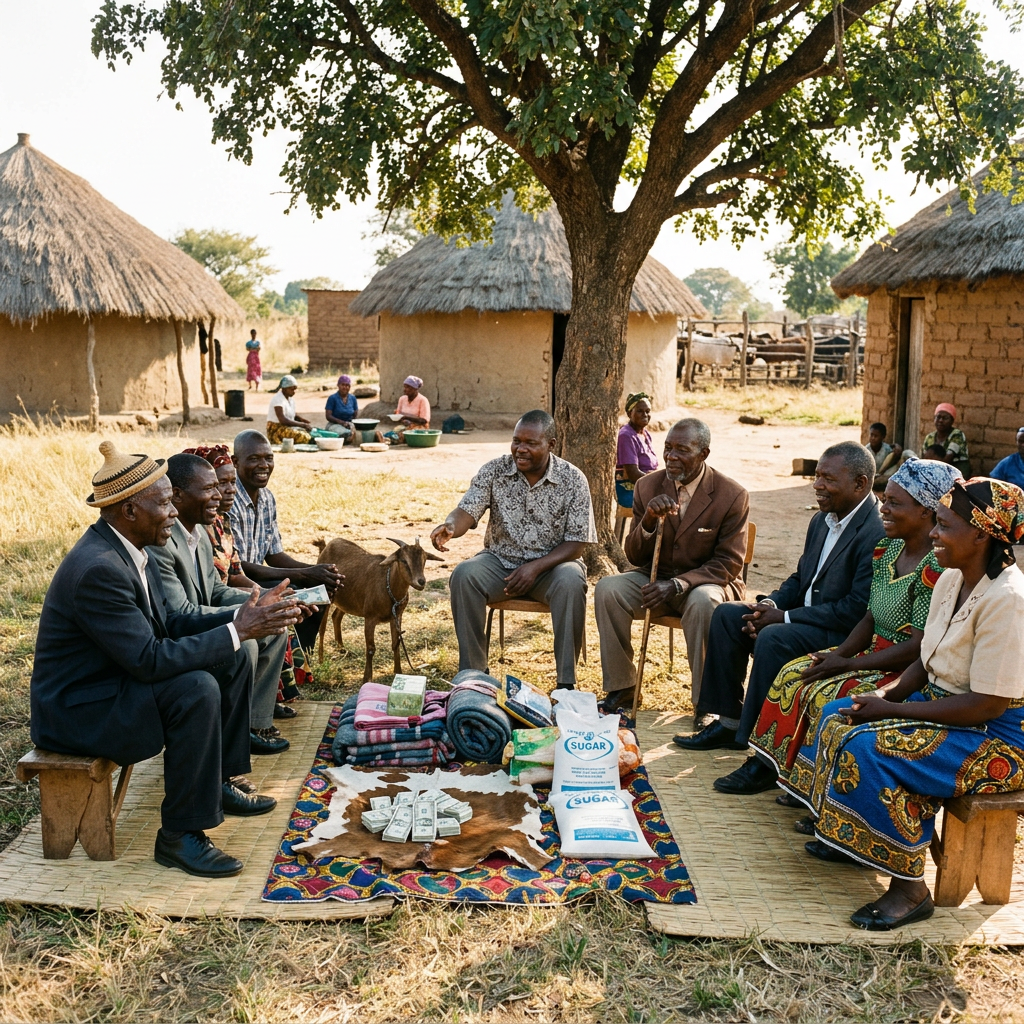
    Community members gathered beneath a tree around shared goods and supplies.
    A community gathering beneath a village shade tree.

    Marriage as a joining of families

    In some Shona customary marriage traditions, families take part in formal discussions often associated with roora. In Ndebele contexts, the term lobola is commonly used. These processes can involve family representatives, gifts, negotiations and the recognition of relationships between families. The details and meanings vary, and contemporary couples and families may adapt customary practices in different ways.

    It is important not to reduce these traditions to a simple transaction. For many participants, the process is about introductions, respect, family recognition and the responsibilities that come with marriage. It is also not universal: Zimbabweans follow different cultural, religious and personal approaches to marriage.

    Remembering and honouring those who have died

    Funerals and remembrance practices bring relatives, friends and neighbours together to support the bereaved. The ways people mourn, gather and remember are shaped by family custom, faith, community and individual wishes.

    One example often discussed in writing about Shona ritual life is kurova guva. In some Shona communities, this ceremony is associated with welcoming the spirit of a deceased family member into the family ancestral tradition. Its timing and practice can vary, and not all Shona families observe it. It should not be presented as a ceremony followed by every Zimbabwean community.

    Community, seasons and shared responsibility

    Across different communities, gatherings may be connected to harvests, rain, religious calendars, initiation, family milestones or local histories. Music, dance, food, speeches and shared work can all form part of these occasions. Their significance is best understood through the people who practise them, rather than through generalisations made from outside.

    Traditions continue to change

    Migration, urban life, intermarriage, Christianity and other faith traditions, changing family structures and personal choices all influence how ceremonies are observed today. Some families preserve particular practices; others combine customs or choose not to observe them. Change does not automatically mean that culture has disappeared. It can also reflect how people negotiate meaning in the present.

    For Zimbabweans in the diaspora, ceremonies may also become a way of bringing generations together across distance. Families might travel, use video calls, explain customs to children growing up elsewhere or create new ways of marking important moments.

    At ZimHeritage, we want to document these practices with care: naming the community and context, listening to people who hold the knowledge, and recognising that traditions are not identical from one household to another.

    Which family or community tradition would you like future generations to understand? Share its story with us.

    Further reading

    For an academic discussion of kurova guva and its musical and ritual dimensions, see Jennifer W. Kyker’s study in Ethnomusicology Forum.

  • What We Wear, What We Carry: Dress and Identity in Zimbabwe

    What We Wear, What We Carry: Dress and Identity in Zimbabwe

    Clothing can tell a story before a person says a word. A fabric chosen for a celebration, a piece of beadwork, a headwrap, a carefully tailored outfit or a contemporary design inspired by family history can all carry meaning. In Zimbabwe, dress is not one fixed national costume. It is a varied and changing expression of identity.

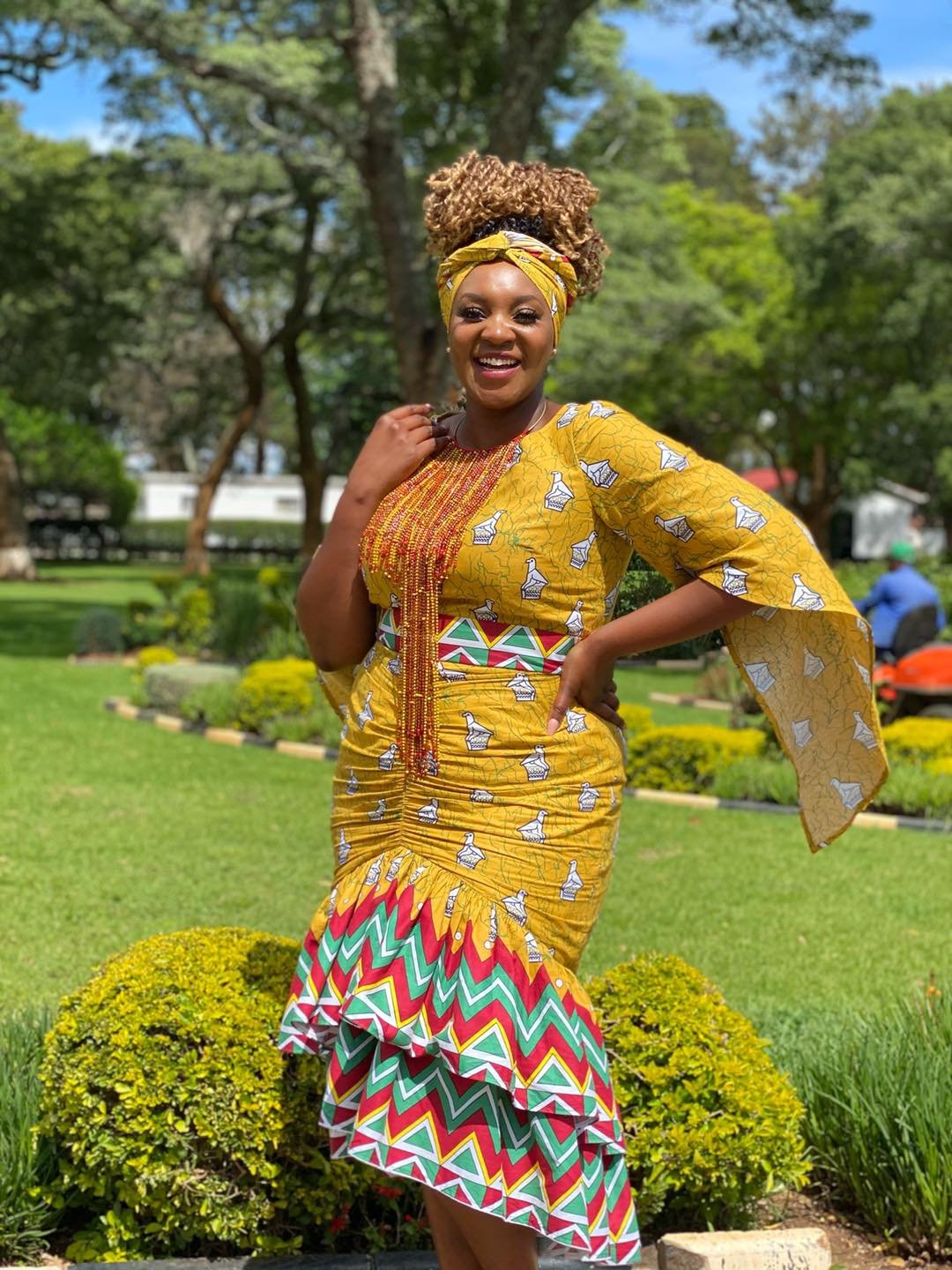
    Ruvhe, traditional Zimbabwean dress.
    Clothing and adornment carry stories of identity and belonging.

    Many communities, many ways of dressing

    Zimbabwe is home to communities with distinct histories, languages and cultural practices. Clothing and adornment can differ across regions, families, occasions and generations. Beadwork, fabrics, colours, wraps, jewellery and hairstyles may hold particular meanings in specific settings, but no single item should be treated as a symbol for every Zimbabwean or every community.

    Dress also changes with context. What someone wears for everyday work may be different from what they choose for a wedding, church service, cultural gathering or national celebration. People combine inherited styles with personal taste, practical needs and contemporary fashion.

    Tradition is not frozen in time

    Traditional influence can be seen in modern design through fabric choices, pattern, colour, craft and references to local histories. Designers and makers reinterpret these ideas rather than simply reproducing the past. The result can be clothing that feels contemporary while still acknowledging where its inspiration comes from.

    Projects such as the British Council-supported I Wear My Culture initiative have explored the aesthetics of multiple communities through fashion and film. Its approach is a useful reminder that Zimbabwe’s cultural identities are plural, and that respectful design begins with listening and learning.

    The debate around a national dress

    Zimbabwe has also had public conversations about national dress and what it should represent. Research published in the journal Nationalities Papers examined how people responded to the idea of a national dress, finding that views were not uniform. For some, it offered a way to express national pride; for others, it did not reflect their everyday identity or the country’s cultural variety.

    That debate matters because identity cannot be designed from the top down and expected to fit everyone. A national story can make room for shared symbols while recognising the many local and personal ways people express belonging.

    What we pass on

    Clothes can become family archives. A garment kept for a special occasion, a photograph of a grandparent, a handmade accessory or a fabric associated with a particular place can hold memories that are difficult to put into words. For Zimbabweans living abroad, wearing or adapting familiar styles can be one way of staying connected while creating something new.

    Zimbabwean style is not a museum display. It is worn, debated, redesigned and lived. Its future belongs to the communities, craftspeople, designers and individuals who continue to give it meaning.

    Is there an outfit, fabric or accessory that reminds you of home? Share the story behind it with ZimHeritage.

    Further reading

    Read the academic study, “Negotiating national identity in postcolonial Zimbabwe through a national dress”.

  • A Taste of Zimbabwe: The Stories Behind the Food We Share

    A Taste of Zimbabwe: The Stories Behind the Food We Share

    There are meals that do more than satisfy hunger. They bring people together, mark a season, welcome a visitor and remind us of home. Across Zimbabwe, food is one of the ways memory is passed from one generation to another — through ingredients, cooking methods, family preferences and the familiar instruction to have a little more.

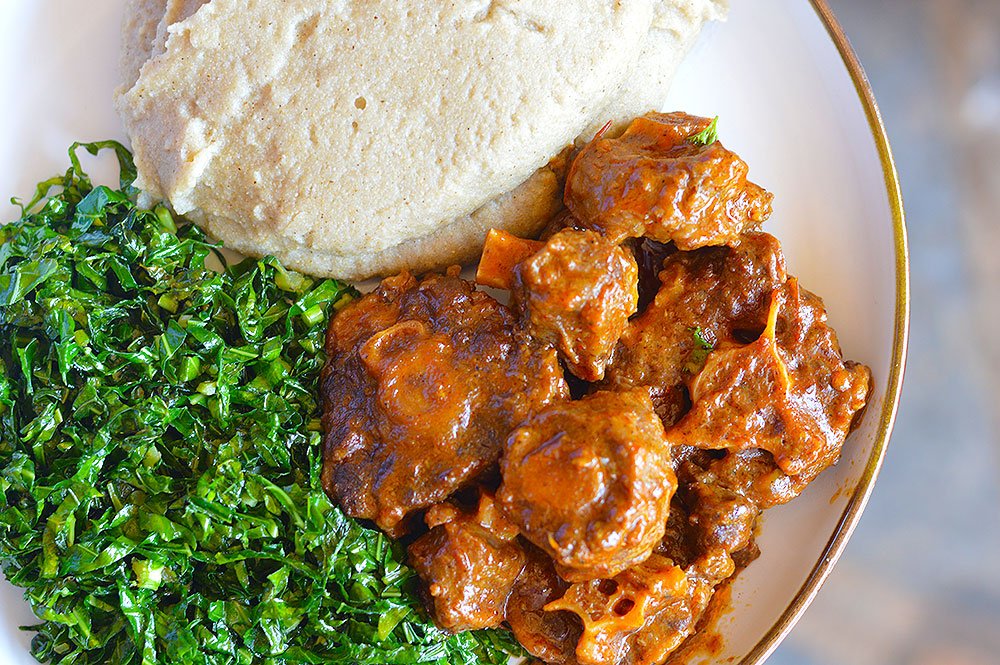
    A Zimbabwean meal of sadza served with oxtail relish.
    A meal that brings flavour, memory and family together.

    Sadza and the centre of the meal

    For many households, sadza is a familiar foundation of the meal. Usually prepared from maize meal and water, it is eaten with a range of relishes. The relish might be leafy vegetables, beans, meat, fish or a peanut-based dish. What accompanies sadza changes with household, season, region, budget and personal taste. There is no single menu that represents every Zimbabwean table.

    More than one kind of comfort food

    Zimbabwe’s food culture reaches well beyond one staple. Dried and fresh vegetables, groundnuts, beans, pumpkins, sweet potatoes, millet and sorghum all have a place in different food traditions. Dovi — a peanut-based sauce or relish — is prepared in different ways. Mutakura, a mixture of cooked grains and legumes, is another much-loved food in some homes. Roasted maize, maputi and seasonal fruits can bring back memories of school days, markets and journeys.

    Food names and recipes can vary between communities. A dish prepared one way in one family may be adapted by another. These differences are not a problem to be corrected; they are part of the richness of Zimbabwean food heritage.

    The meaning of sharing

    Hospitality is often expressed through food: a plate offered to a visitor, a pot prepared for a gathering, or relatives contributing ingredients when a family is hosting. Meals can connect generations, especially when older relatives explain how a dish was prepared in their childhood or why a particular ingredient was used.

    A changing Zimbabwean kitchen

    Urban life, migration, changing incomes and global influences have all shaped what people cook and eat. Today’s Zimbabwean kitchens may combine inherited recipes with new ingredients, appliances and influences from other countries. In the diaspora, people recreate familiar flavours where they can, substitute ingredients when they must, and teach children the food names and routines they grew up with.

    Preserving food heritage does not mean keeping every recipe unchanged. It means recording the knowledge, remembering the people who taught us, and making room for new generations to add their own chapter.

    What dish takes you straight back home? Tell ZimHeritage about the meal, the person who made it and the memory that stays with you.

    Further reading

    For wider context on Zimbabwe’s cultural diversity and heritage, see the UNESCO country profile for Zimbabwe.

  • Ngoma: The Heartbeat of Zimbabwean Culture

    Ngoma: The Heartbeat of Zimbabwean Culture

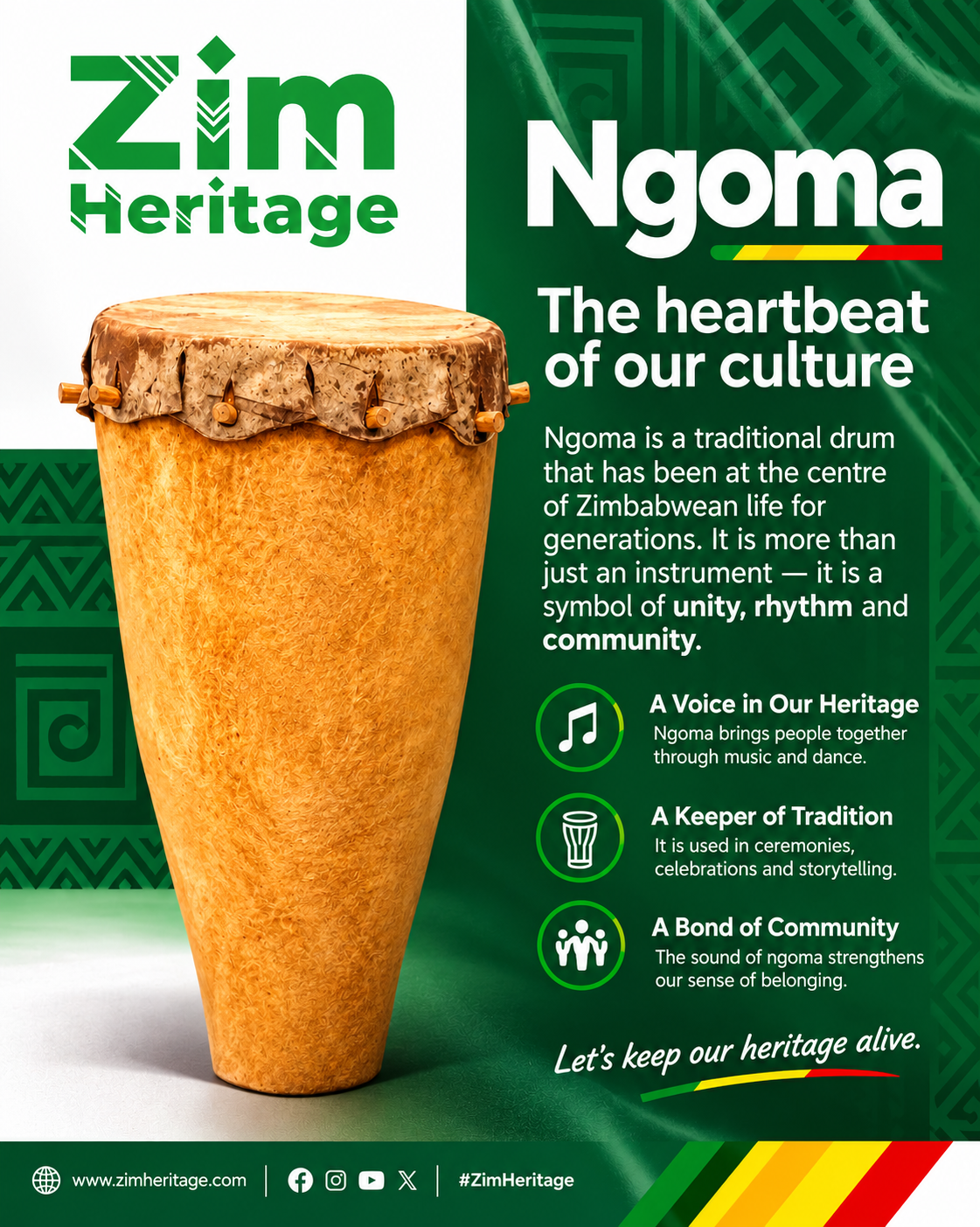
    Ngoma — the heartbeat of Zimbabwean culture, featuring a traditional drum and ZimHeritage branding

    Before a song reaches its chorus, before dancers find their steps, there is often a rhythm that brings everyone into the moment. In Zimbabwe, the sound of the ngoma — the traditional drum — is part of a much wider musical heritage in which drumming, singing and dance are closely connected.

    More than an instrument

    The word ngoma is widely used across parts of Africa to mean a drum. In Zimbabwean musical traditions, it can also point to the music and performance practices built around drumming, song and dance. It is important to remember that there is no single drum, rhythm or performance that represents every Zimbabwean community. Instruments, names and traditions vary between regions and cultural groups.

    In many Shona traditions, a ngoma is a hand-played drum, commonly made with a wooden body and an animal-skin drumhead. Different drums and playing styles serve different musical purposes. Some performances use more than one drum, while others bring the drum together with voices, handclapping and instruments such as the hosho — a pair of seed-filled gourd rattles that help carry the rhythm.

    When rhythm brings people together

    Traditional music in Zimbabwe is not simply something to listen to from a distance. In many settings, it is participatory: musicians, singers and dancers respond to one another, and the rhythm helps shape the movement and energy of a gathering.

    Ngoma-based music can be heard in social celebrations, dance performances and, in some communities, spiritual or ancestral ceremonies. The meaning of a performance depends on its particular tradition and setting. For example, ethnomusicologist Diane Thram’s research on the Zezuru dandanda tradition in Murewa describes a practice with its own songs, distinctive drum and hosho styles, and both sacred and public performance contexts.

    Different dances, distinctive rhythms

    Zimbabwe has a rich range of traditional dance and music forms. Among Shona dance-drumming genres are jerusarema (also known as mbende), mhande, mbakumba, dandanda and dinhe. Each has its own musical character, song repertoire and relationship between rhythm and movement. Ngoma and hosho feature in a number of these traditions, although the instruments and patterns are not identical from one genre to another.

    In other parts of Zimbabwe, communities have their own distinctive musical and dance heritages. The Ndebele tradition of muchongoyo, for instance, has its own performance style and history. Recognising this variety matters: Zimbabwe’s cultural story is made up of many traditions, not one uniform sound.

    A living tradition

    The drum has not been left behind by modern life. Traditional rhythms continue to be performed, taught and reinterpreted. Zimbabwean musicians have also drawn on traditional ngoma patterns and song forms in contemporary popular music, creating new sounds while keeping connections with older musical ideas.

    That continuity is not automatic. Songs, rhythms, instrument-making skills and the knowledge of when and how particular music is performed are often passed on through practice and shared experience. Supporting performers, learning from cultural custodians and recording community histories all help keep this knowledge visible for future generations.

    Listen, learn and keep the rhythm alive

    For many Zimbabweans, the sound of a drum can bring back memories of family gatherings, celebrations, dance, village life or time spent learning from elders. For others, it is an invitation to discover traditions they may not yet know.

    Ngoma is more than a beat. It is part of a living musical heritage — one shaped by different communities, passed between generations and continually renewed through performance.

    What does the sound of ngoma mean to you? Do you remember a particular dance, celebration, song or moment when the drums brought people together? Share your memory with ZimHeritage. Your story is part of Zimbabwe’s heritage.

    Further reading

  • The Zimbabwe Bird: A Symbol Carved in Stone

    The Zimbabwe Bird: A Symbol Carved in Stone

    Culture · Symbols and identity

    The Zimbabwe Bird: A Symbol Carved in Stone

    From the stone walls of Great Zimbabwe to the national flag, the story of a remarkable sculpture — and the complicated journey of a national symbol.

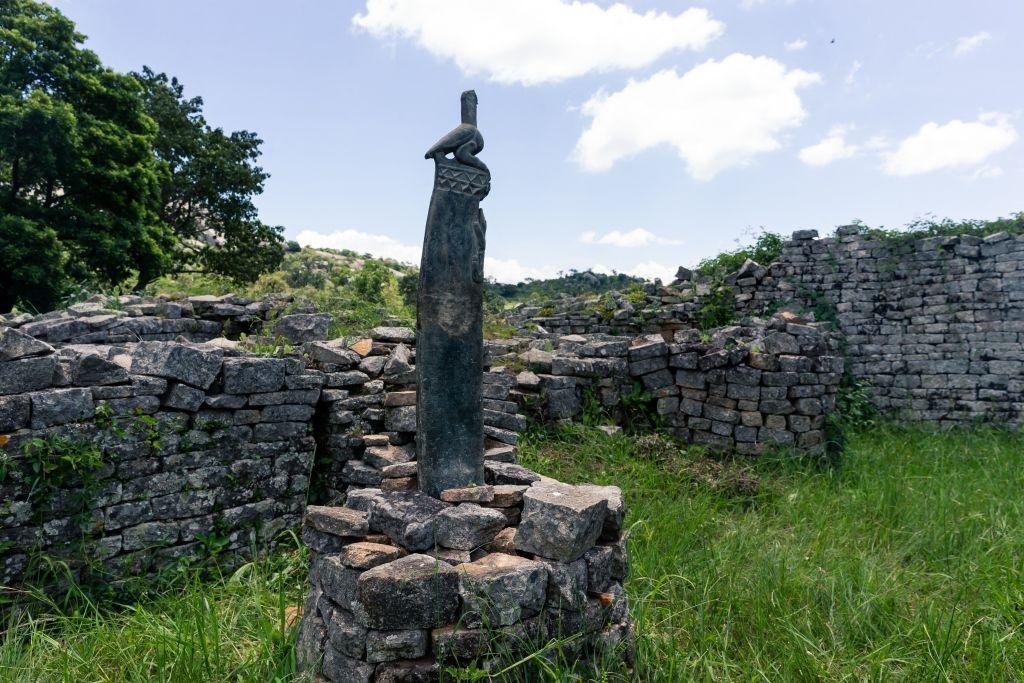
    Zimbabwe Bird soapstone sculpture, the national symbol
    The Zimbabwe Bird: an ancient sculpture that became a national symbol

    It appears on the national flag, the coat of arms, coins and official emblems. Yet the Zimbabwe Bird is much older than the modern nation whose name it carries. Its story begins at Great Zimbabwe, where skilled craftspeople carved birds from soapstone and placed them high on stone columns within one of southern Africa’s most important historical centres.

    The bird is familiar to many Zimbabweans. Its history, however, is not simply a story of a national logo. It is also a story of art, spiritual meaning, colonial removal, contested interpretation and the recovery of cultural heritage.

    Eight birds at Great Zimbabwe

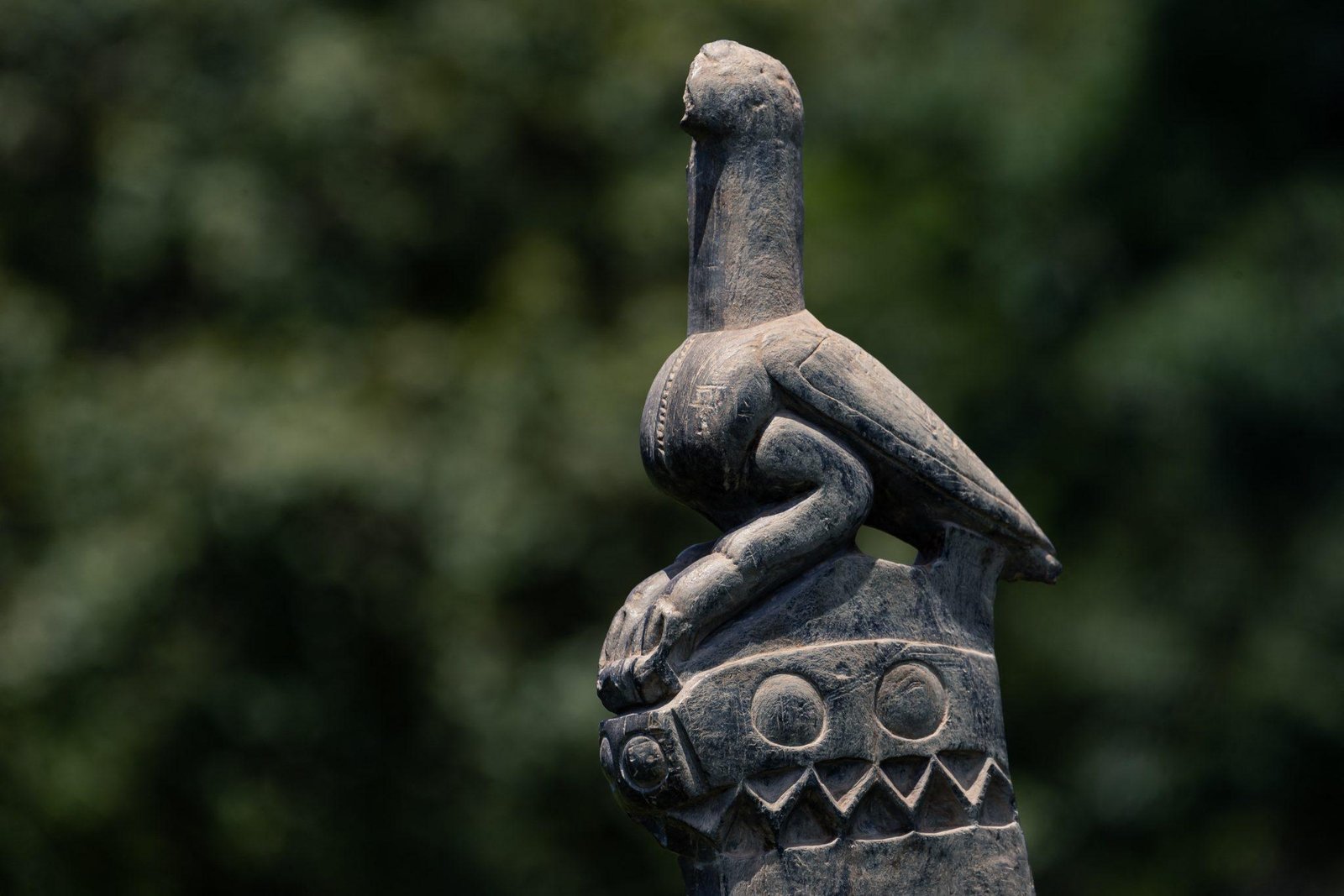
    A Zimbabwe Bird sculpture associated with Great Zimbabwe
    A closer look at the Zimbabwe Bird and its sculptural form

    Archaeological research records eight celebrated soapstone birds associated with Great Zimbabwe. They were found in different parts of the monument, with six recovered from the Eastern Enclosure of the Hill Complex, one from the Western Enclosure and another from the Valley Enclosures. Each sculpture was carved from soft stone known as soapstone or steatite and stood on a tall column.

    The carvings are striking because they combine bird-like and human features. Some have lips where a beak might be expected, and feet with five toes rather than the talons usually shown in naturalistic bird sculpture. The bird itself is roughly 40 centimetres tall on average, while the supporting columns were more than a metre high.

    These were not casual decorations. Scholars have suggested that the birds carried religious, political or royal significance. Their precise meaning and the way they were originally displayed are not fully settled, so it is important to distinguish informed interpretation from certainty.

    The Zimbabwe Bird did not begin as a modern emblem. It was an object made, placed and understood within the world of Great Zimbabwe.

    What bird is it?

    The sculptures are often described as birds of prey. Some researchers have proposed the bateleur eagle, known in Shona as chapungu; others have discussed the African fish eagle or other possibilities. The carvings are stylised, not naturalistic portraits, and there is no universally agreed identification of the exact species.

    Interpretations of their symbolism are also varied. Some scholarship connects the birds with royal authority and ancestors. In Shona spiritual understandings, birds of prey can be associated with messages between different realms. These interpretations help explain why the sculptures may have held importance, but they should not be presented as a single proven explanation for all eight carvings.

    Removed from their home

    During the late nineteenth and early twentieth centuries, the birds were taken from Great Zimbabwe by European explorers and collectors. Some entered private collections and museums outside the country. One of the best-known birds was acquired by Cecil Rhodes and placed at his residence, Groote Schuur, in Cape Town.

    The removal of the birds was part of a wider colonial collecting history in which objects of cultural and spiritual importance were displaced from African communities and monuments. Great Zimbabwe itself was also subjected to interpretations that denied or minimised its African origins. Archaeological work helped establish the monument’s deep local history, but the movement of its treasures left a lasting question about ownership and restitution.

    The return — and what remains unresolved

    After independence in 1980, the return of the birds became an important matter of cultural heritage. Four birds held in South Africa were returned to Zimbabwe in 1981. A separate fragment held in Germany was returned in 2000 under an arrangement described as a permanent loan; it was later reunited with the matching portion in Zimbabwe.

    Not every part of this history has been resolved. The bird associated with Cecil Rhodes remains at Groote Schuur in South Africa. Its continued location is part of the wider debate about colonial-era collections, restitution and the rights of countries and communities to their cultural property.

    From stone carving to national emblem

    The bird’s journey did not end with its return. During the colonial period, the image was incorporated into the iconography of Southern Rhodesia. At independence in 1980, the new country adopted the Zimbabwe Bird as a national symbol, giving an ancient work of art a new public meaning. It appears on the national flag and coat of arms and is reproduced across national currency and official insignia.

    That transformation matters. The symbol connected the modern state to a civilisation whose achievements had been misrepresented under colonial rule. It became a visible statement that Zimbabwe’s name, history and identity were rooted in African achievement.

    A symbol with more than one meaning

    For some, the bird represents national unity and pride. For others, it carries spiritual associations, memories of Great Zimbabwe and the work of the people who carved it. It can also prompt difficult questions: who owns heritage, who gets to interpret it, and how should a national symbol represent the many communities and histories within Zimbabwe?

    A symbol can hold several meanings at once. Its importance does not depend on pretending that every question about its origins or use has been answered. In fact, understanding its complexity makes the bird’s story richer.

    Look again at the flag.

    The next time you see the Zimbabwe Bird, remember that it is not simply an image designed for a flag. It is a work of sculpture linked to Great Zimbabwe, shaped by skilled hands, removed during colonial rule, partly returned after independence and still at the centre of conversations about memory and cultural ownership.

    Sources and further reading

    National Museums and Monuments of Zimbabwe — Great Zimbabwe and the eight soapstone birds.

    UNESCO World Heritage Centre — Great Zimbabwe National Monument.

    The Metropolitan Museum of Art — Great Zimbabwe: archaeology, material culture and the soapstone birds.

    University of Oxford — The history and forced migration of the Great Zimbabwe Birds.

    University of Zimbabwe — Research on cultural artefacts and the meanings of the Zimbabwe Bird.

    Smithsonian / Smarthistory — Great Zimbabwe and its material culture.

  • The Mbira: The Sound That Carries Zimbabwe’s Memory

    The Mbira: The Sound That Carries Zimbabwe’s Memory

    ZimHeritage · Culture

    The Mbira: The Sound That Carries Zimbabwe’s Memory

    More than a musical instrument, the mbira holds stories, relationships and rhythms passed between generations — and its voice continues to evolve.

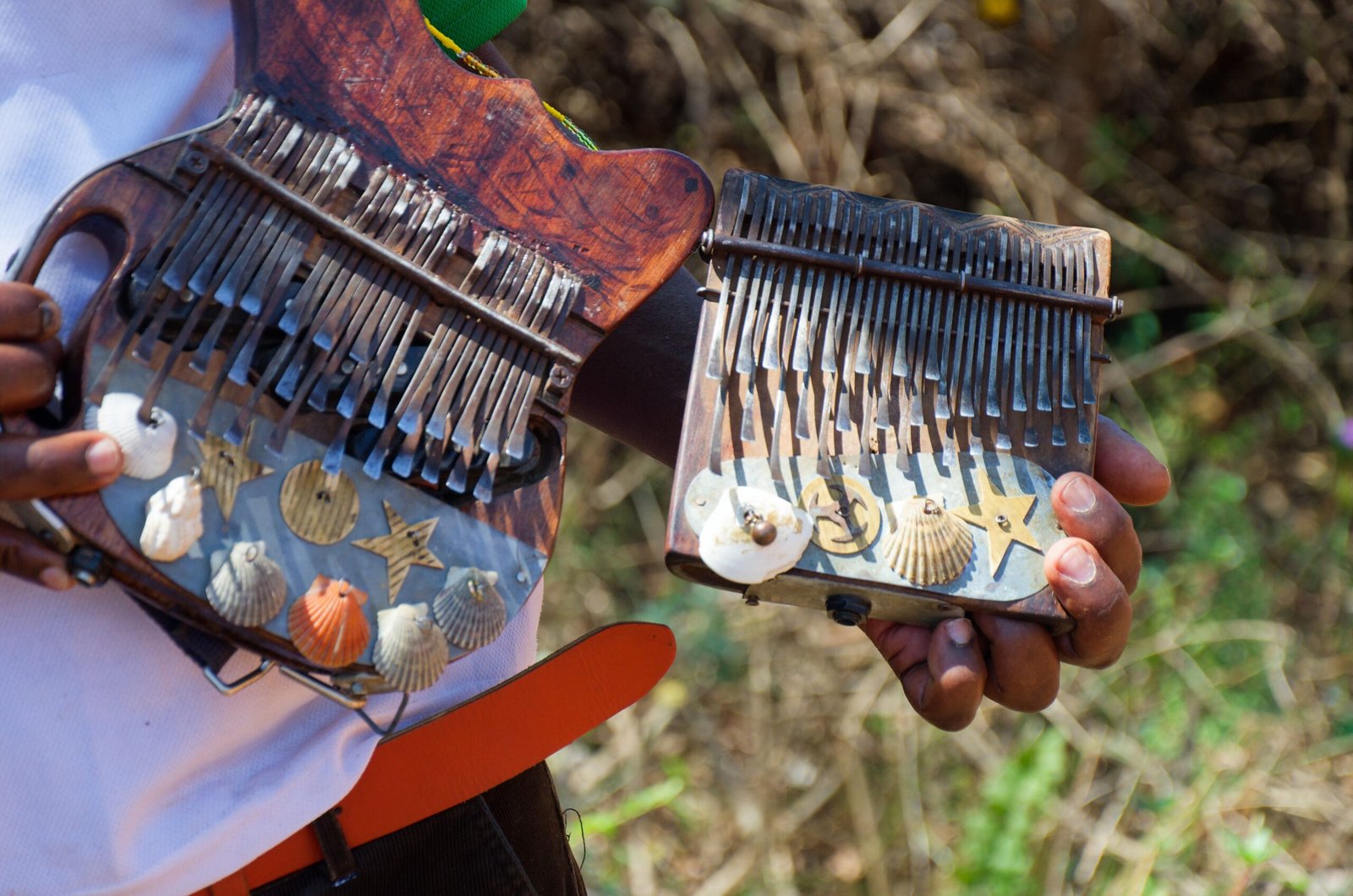
    Mbira instrument, a Zimbabwean musical tradition
    The mbira: an instrument whose sound carries musical knowledge across generations.

    There is a particular quality to the sound of the mbira. Its bright metal notes seem to circle and return, each phrase answering another. Played alone or alongside other instruments, the pattern can feel both intimate and expansive. For many Zimbabweans, the sound is familiar long before its history is fully understood.

    The mbira is often described in English as a “thumb piano”. The description gives a first impression, but it does not tell the whole story. It is a family of instruments with different forms and tunings, made and played across parts of southern Africa. In Zimbabwe, the mbira is especially associated with Shona musical traditions, while other communities, including BaTonga, Venda and Kalanga practitioners, also play forms of the instrument.

    A small instrument with a layered sound

    A common mbira design has a wooden soundboard fitted with rows of metal keys. A player plucks the keys with the thumbs and fingers, and the instrument may be placed inside a hollowed calabash resonator to amplify its sound. The keys can be fashioned from metal such as spring wire or repurposed materials. The result is not a simple sequence of notes: melodies interlock, repeat and shift subtly as the music develops.

    One well-known form is the mbira dzavadzimu, whose name is commonly translated as “mbira of the ancestors”. It is closely associated with the Shona bira, a ceremony in which music helps create the setting for spiritual invocation. But the mbira is not confined to ceremony. It is also played for social gatherings, performance and enjoyment, and contemporary musicians continue to bring its sound into new musical settings.

    The mbira is not only something to hear. It is a practice: making, learning, remembering and playing together.

    Music, memory and community

    UNESCO’s description of the tradition records the instrument’s use in Zimbabwe at spiritual ceremonies, funeral wakes, memorials and traditional healing ceremonies, as well as at social gatherings. These settings show why it is difficult to separate the music from the people and occasions around it.

    Its musical structure also carries meaning. A theme is repeated, but rarely as an exact copy: each return can vary slightly, while other melodic lines weave around it. Songs may communicate messages about behaviour, community concerns and events from the past. In this way, musical knowledge can hold memories and shared values without depending only on written records.

    It is important, though, not to treat every mbira performance as having the same meaning. The instrument has different forms and uses, and the significance of a particular performance depends on the musicians, community and context. The mbira’s cultural importance lies partly in that range.

    A tradition that keeps being learned

    For generations, knowledge of making and playing the mbira has been passed on through close teaching, often within families and through apprenticeship. That transmission continues, while formal coaching, workshops and music education have created additional ways for younger players to learn.

    In 2020, UNESCO inscribed the Art of crafting and playing Mbira/Sansi, jointly nominated by Malawi and Zimbabwe, on its Representative List of the Intangible Cultural Heritage of Humanity. The recognition matters, but it is not what gives the tradition its value. Its life depends on the makers, players, teachers and communities who continue to practise it and pass on their knowledge.

    From heritage to the present

    The mbira has travelled beyond the settings in which many people first encountered it. It appears in recordings, live performances and collaborations with other musical styles. Artists have carried its sound to audiences around the world, while musicians at home continue to explore what it can express today.

    That movement between continuity and change is part of the story. Preserving a living tradition does not mean freezing it in one moment or insisting that it can only be played in one way. It means respecting the knowledge and communities from which it comes, while allowing musicians to create, teach and interpret it with care.

    For Zimbabweans at home and across the diaspora, the mbira can be a point of recognition: a sound that recalls family, place, ceremony or simply the feeling of hearing a familiar rhythm. Its story is still being written — every time someone makes an instrument, teaches a new player or begins the pattern again.

    ZimHeritage · The places. The people. The stories.A living sound. A shared memory. A tradition still in motion.