
The Mbira: The Sound That Carries Zimbabwe’s Memory
More than a musical instrument, the mbira holds stories, relationships and rhythms passed between generations — and its voice continues to evolve.
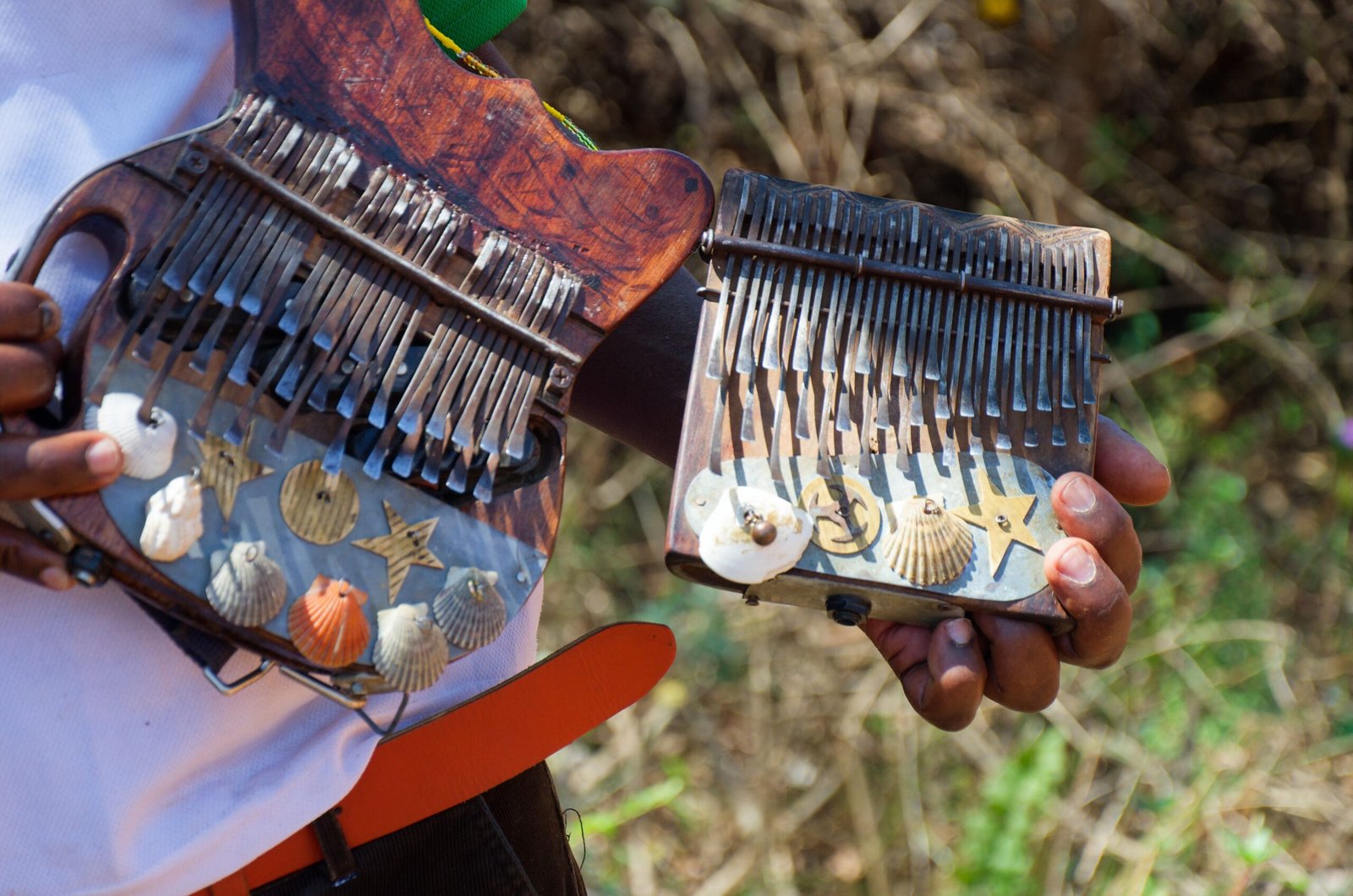
There is a particular quality to the sound of the mbira. Its bright metal notes seem to circle and return, each phrase answering another. Played alone or alongside other instruments, the pattern can feel both intimate and expansive. For many Zimbabweans, the sound is familiar long before its history is fully understood.
The mbira is often described in English as a “thumb piano”. The description gives a first impression, but it does not tell the whole story. It is a family of instruments with different forms and tunings, made and played across parts of southern Africa. In Zimbabwe, the mbira is especially associated with Shona musical traditions, while other communities, including BaTonga, Venda and Kalanga practitioners, also play forms of the instrument.
A small instrument with a layered sound
A common mbira design has a wooden soundboard fitted with rows of metal keys. A player plucks the keys with the thumbs and fingers, and the instrument may be placed inside a hollowed calabash resonator to amplify its sound. The keys can be fashioned from metal such as spring wire or repurposed materials. The result is not a simple sequence of notes: melodies interlock, repeat and shift subtly as the music develops.
One well-known form is the mbira dzavadzimu, whose name is commonly translated as “mbira of the ancestors”. It is closely associated with the Shona bira, a ceremony in which music helps create the setting for spiritual invocation. But the mbira is not confined to ceremony. It is also played for social gatherings, performance and enjoyment, and contemporary musicians continue to bring its sound into new musical settings.
Music, memory and community
UNESCO’s description of the tradition records the instrument’s use in Zimbabwe at spiritual ceremonies, funeral wakes, memorials and traditional healing ceremonies, as well as at social gatherings. These settings show why it is difficult to separate the music from the people and occasions around it.
Its musical structure also carries meaning. A theme is repeated, but rarely as an exact copy: each return can vary slightly, while other melodic lines weave around it. Songs may communicate messages about behaviour, community concerns and events from the past. In this way, musical knowledge can hold memories and shared values without depending only on written records.
It is important, though, not to treat every mbira performance as having the same meaning. The instrument has different forms and uses, and the significance of a particular performance depends on the musicians, community and context. The mbira’s cultural importance lies partly in that range.
A tradition that keeps being learned
For generations, knowledge of making and playing the mbira has been passed on through close teaching, often within families and through apprenticeship. That transmission continues, while formal coaching, workshops and music education have created additional ways for younger players to learn.
In 2020, UNESCO inscribed the Art of crafting and playing Mbira/Sansi, jointly nominated by Malawi and Zimbabwe, on its Representative List of the Intangible Cultural Heritage of Humanity. The recognition matters, but it is not what gives the tradition its value. Its life depends on the makers, players, teachers and communities who continue to practise it and pass on their knowledge.
From heritage to the present
The mbira has travelled beyond the settings in which many people first encountered it. It appears in recordings, live performances and collaborations with other musical styles. Artists have carried its sound to audiences around the world, while musicians at home continue to explore what it can express today.
That movement between continuity and change is part of the story. Preserving a living tradition does not mean freezing it in one moment or insisting that it can only be played in one way. It means respecting the knowledge and communities from which it comes, while allowing musicians to create, teach and interpret it with care.
For Zimbabweans at home and across the diaspora, the mbira can be a point of recognition: a sound that recalls family, place, ceremony or simply the feeling of hearing a familiar rhythm. Its story is still being written — every time someone makes an instrument, teaches a new player or begins the pattern again.